
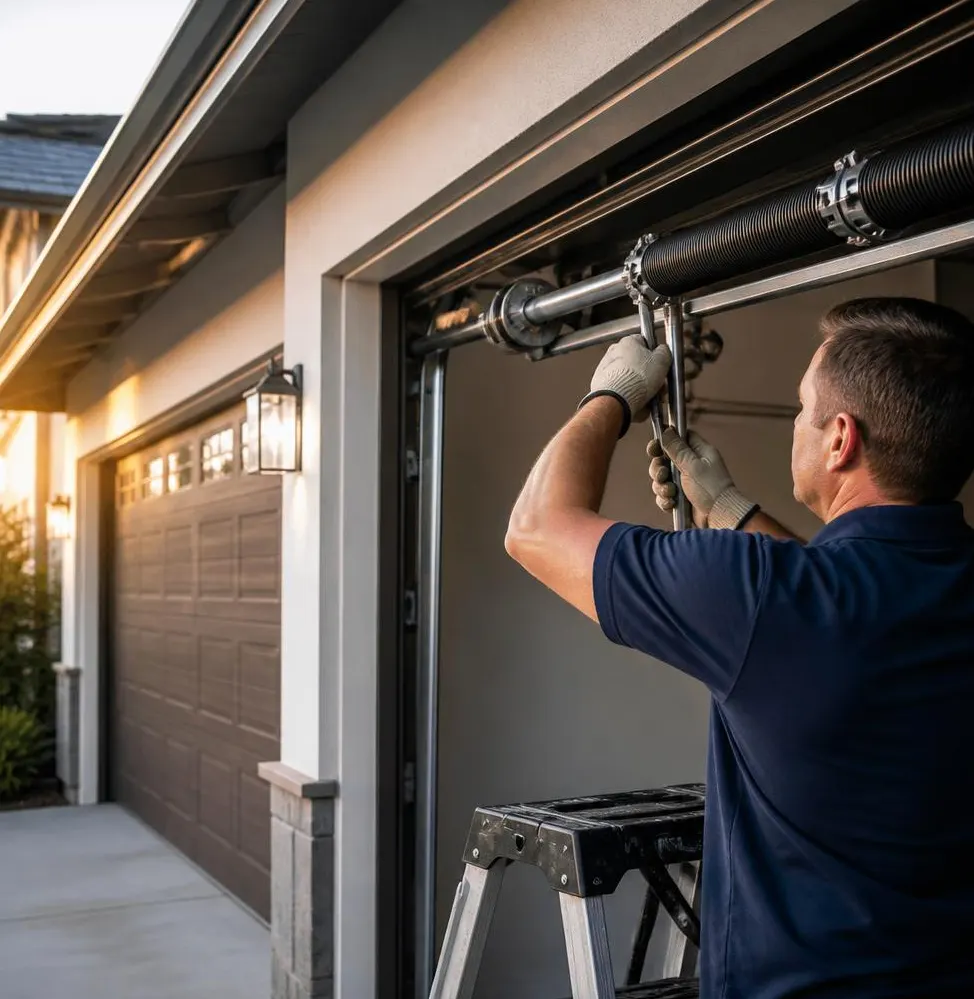
The Instinct to Pull the Cord First
Here's the scenario: the garage door won't respond to the remote, or the opener is humming but the door isn't moving. You spot the red cord hanging from the trolley and figure, reasonably enough, that's the manual override — pull it, and you can at least get the car out. It feels like the obvious first move because the cord is right there, it's clearly meant to be pulled, and nobody wants to be stuck.
The problem is that pulling the cord doesn't fix anything. It disconnects the door from the opener's carriage, which means the door is now held up by nothing but its springs and whatever your hands are doing. If those springs are already weak, worn, or broken — which is often the actual reason the door stopped working in the first place — you've just removed the one thing keeping a 150- to 400-pound door from dropping.
What the Release Cord Is Actually For
The emergency release is a safety and convenience feature, not a troubleshooting tool. It exists so you can manually open or close the door when:
- The power is out and the opener has no electricity
- The opener motor has failed but the door hardware is fine
- A car is trapped inside and needs to get out during an outage
In all of these cases, the assumption baked into the design is that the door's spring system is healthy and balanced. Pull the cord on a door with good springs, and it should lift and hold with moderate effort, roughly like lifting a lawnmower. Pull it on a door with a broken or badly worn spring, and there's nothing between the panel and gravity.
When Pulling It Makes Things Worse
The dangerous moment is pulling the cord while the door is open, especially if you don't know the condition of the springs. A door resting in the open position is being held there entirely by spring tension. Disconnect it from the opener in that state and, if a spring is cracked or has lost tension, the door can free-fall. This is how fingers, toes, and car roofs get hurt, and it happens fast enough that there's no time to react.
It's also worth knowing that spring wear isn't random. Central Valley summers put torsion springs through repeated heat cycling, and the dust that comes with our dry season works into the coils and hinges, adding friction and strain over time. Come winter, rain and temperature swings add another layer of stress on metal that's already fatigued. None of this means your springs are doomed on a schedule — it means a spring that's a few years old and has never been serviced is a reasonable thing to be cautious about before you disconnect it from its only support system.
The Right Way to Use the Cord
- Close the door first, if you can. If the opener still moves the door even partially, run it down before pulling the release. A closed door resting on the ground has no tension to release suddenly.
- If the door is stuck open, don't pull the cord solo. Have someone support the door, or clamp locking pliers onto the track just below one of the rollers so the door can't slide down the track even if it drops.
- Test the balance manually. With the door disconnected, lift it by hand about halfway. A properly balanced door will stay roughly in place on its own. If it drifts down or feels unexpectedly heavy, stop — that's a spring issue, not an opener issue.
- To reconnect, pull the cord again (most releases have a second position for this) or run the opener briefly; the trolley will usually catch and re-engage on its own.
Signs the Door Had a Problem Before You Touched the Cord
If any of these sound familiar, treat the release cord with extra caution and get the door looked at:
- The door feels heavy or uneven when lifted by hand
- One side appears higher than the other when it's open
- You hear a loud bang from the garage, which is often a spring breaking
- The opener strains, reverses, or stalls partway through its cycle
When to Call Manteca Garage Door
If disconnecting the door reveals it's unbalanced, heavy, or dropping on its own, that's a job for spring replacement, not a DIY adjustment — torsion springs are under serious tension and aren't safe to swing a wrench near without the right tools. If the opener itself is the issue — not responding, cycling oddly, or failing after an outage — our garage door opener service covers diagnosis and repair or replacement. Either way, we'll check the whole system while we're there, since a spring problem and an opener problem often show up together.
If your garage door in Manteca, Lathrop, Ripon, Tracy, Stockton, Escalon, Lodi, or Modesto isn't lifting the way it should, give Manteca Garage Door a call before you rely on that red cord again — we'll get it balanced, safe, and working the way it's supposed to.